
How it began…
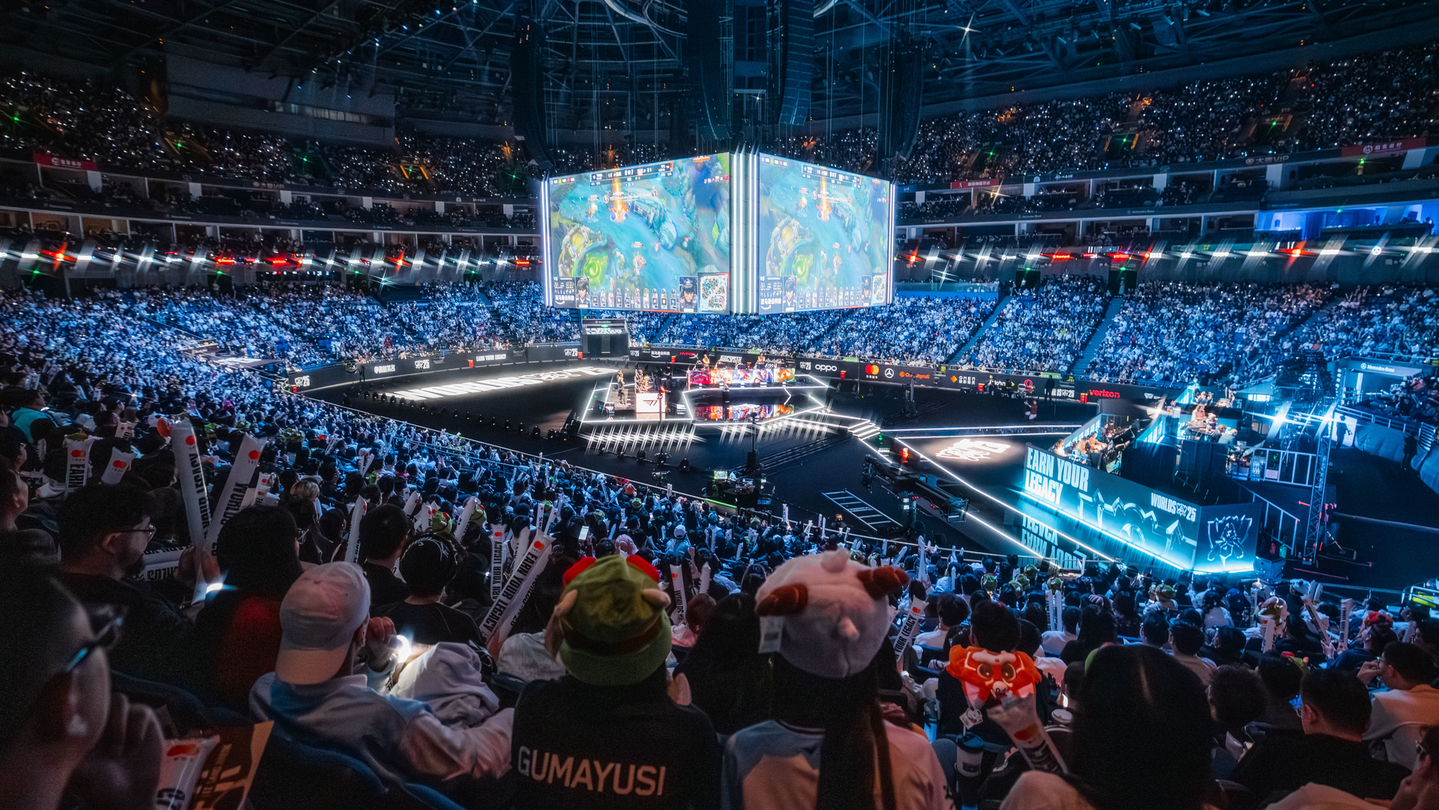
Games have been part of me for as long as I can remember. As a kid it was casual stuff, Club Penguin (opens in new tab) and Neopets (opens in new tab), but it grew into a real passion with League of Legends (opens in new tab), a multiplayer online battle arena (opens in new tab) (MOBA). It started as a hobby, but I had a natural talent for it, and it turned serious. I climbed to the top fraction of a percent of players worldwide and competed in tournaments. I also grew up on Blizzard (opens in new tab)'s StarCraft (opens in new tab), a real-time strategy (opens in new tab) game, playing the original before moving to StarCraft II (opens in new tab) when it launched in 2010. These games are some of the fondest memories of my childhood, long before I ever imagined one of them would point me toward artificial intelligence (AI).
The AlphaStar moment
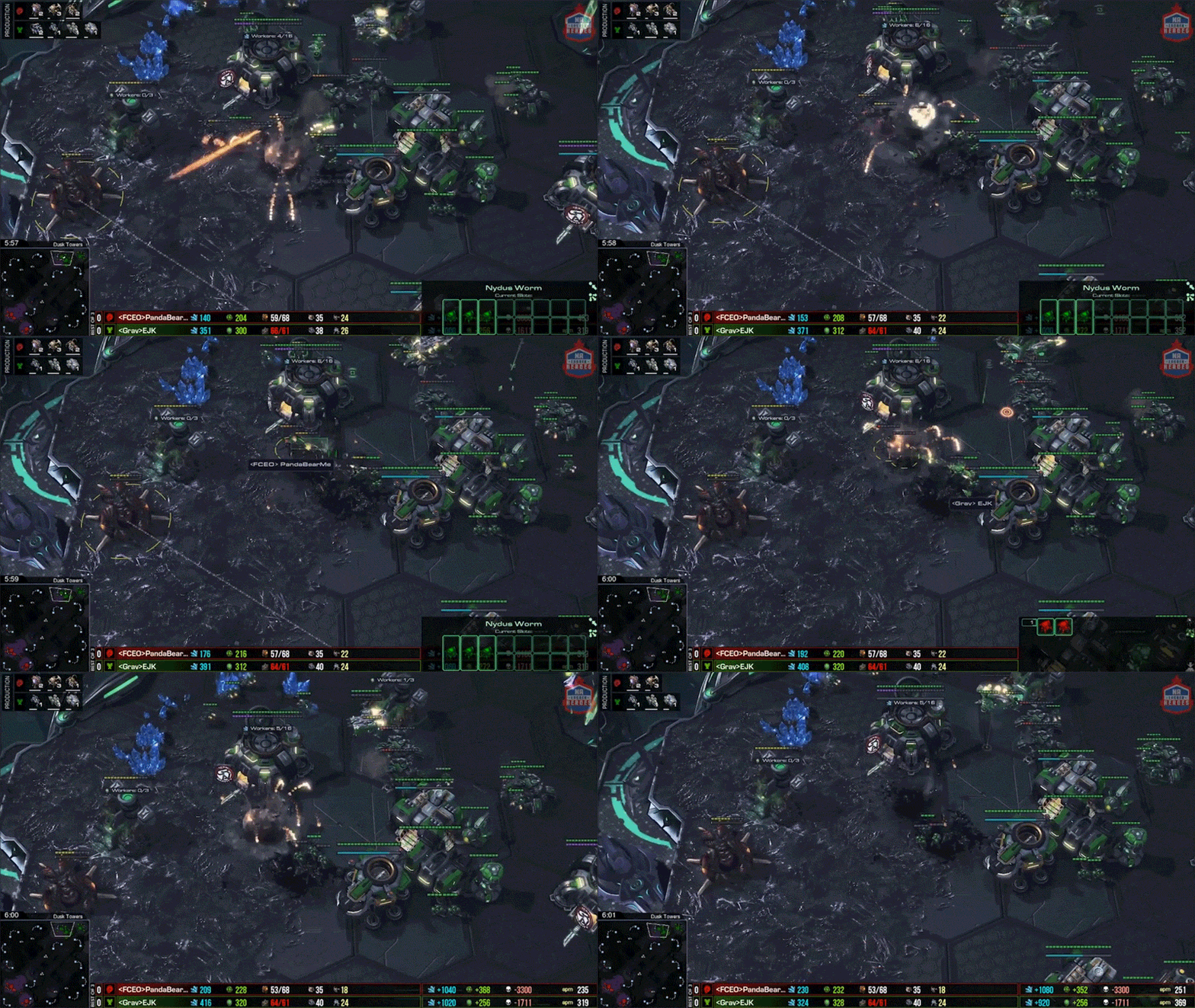
In 2019, Google DeepMind (opens in new tab), one of the world's top AI research labs, set out to conquer StarCraft II with its AI, AlphaStar (opens in new tab). They put it up against TLO (opens in new tab), one of the best players in the world, in a live showmatch (opens in new tab). It won, and it wasn't close, it swept the series 5-0.
None of that was supposed to be possible. StarCraft is insanely hard, even for the average person (I'm living proof). You play under fog of war (opens in new tab), half-blind to what your opponent is doing, the game never pauses for you to think, and at any second there are a near-infinite number of moves open to you. Google's engineers gave it the game and a way to learn, and it taught itself (opens in new tab) the rest, playing millions of matches against itself until it could beat a professional who had devoted his entire life to this one game. That is what made it baffling.
I still remember how cool it felt to witness this AlphaStar moment live. A machine had just taught itself to master a game I loved. That was the spark. Right there, I knew I wanted to work on this, to get into game development and AI and build the kind of thing I had just watched.
Down the AI rabbit hole
So I did what I always do when something grabs me, I went and researched it. That pulled me back through the whole story of AI in games, and it goes back further than most people think. Alan Turing (opens in new tab) sketched out a chess-playing algorithm (opens in new tab) by hand around 1948, before there was a computer capable of running it. Decades later, in 1997, Deep Blue (opens in new tab) beat Garry Kasparov (opens in new tab), the reigning world chess champion, but it won mostly by brute force, searching millions of positions a second with rules that human experts had written by hand. Nearly two decades later, in 2016, AlphaGo (opens in new tab) beat Lee Sedol (opens in new tab) at Go (opens in new tab), a game with more possible positions than there are atoms in the universe, far too many to brute force. A year after that, AlphaZero (opens in new tab) went further still. Handed nothing but the rules, it taught itself chess, Go, and shogi from scratch by playing against itself, until it was superhuman. The machine was no longer running our strategies. It was inventing its own.
And games turned out to be just the start. Later in 2019, the same year AlphaStar stunned me, I stumbled onto OpenAI (opens in new tab)'s research and the early GPT (opens in new tab) models, back when GPT-2 and its 1.5 billion parameters felt enormous, big enough that OpenAI held off on releasing the full model (opens in new tab) over fears it could be misused. It all sounds almost quaint next to the models we use today, which are orders of magnitude larger.
But the deeper I dug, the more I realized OpenAI had not started from scratch. Google had laid the groundwork first. The Transformer (opens in new tab) that GPT is built on, the T in GPT, came out of a 2017 Google paper (opens in new tab) written by a team of eight researchers, and they built their own line on it too, starting with Google BERT (opens in new tab) in 2018, then Google Bard (opens in new tab) in 2023, which they renamed Google Gemini (opens in new tab) in 2024. Underneath, it was the same idea I had watched with AlphaStar, a machine that taught itself at scale, only now it was learning to read and write.
The more I dug in, the more it felt like a calling. So I pulled the trigger and went all in. I pursued a bachelor's in computer science, focused on game development, at DigiPen Institute of Technology (opens in new tab), and outside of class I stacked on internships, networking, and side research projects to get to know the industry inside out, and the rest was history…
Where I am today
These days games are just a hobby, something I play with friends on a rare free evening. Professionally, I am an AI Engineer based in Singapore, building technology for public good, the kind of work I care about most.
My personal drive is to be great at my craft, a genuine subject matter expert. But the part that sets the work apart is rarely the code itself. It is how you break a problem down and trace it outward, from the smallest technical detail to the situation around it, the company, the country, the world, and the politics running through all of it.
AI right now feels like the frontier, the way the early web did for the people building Amazon (opens in new tab) and Google (opens in new tab) in the 1990s, an era-changing technology still being figured out, where the ground shifts every few months. It is the same pull I felt watching AlphaStar, except now I am at the wheel, in a position to shape where it goes and make a difference for people down the line.